
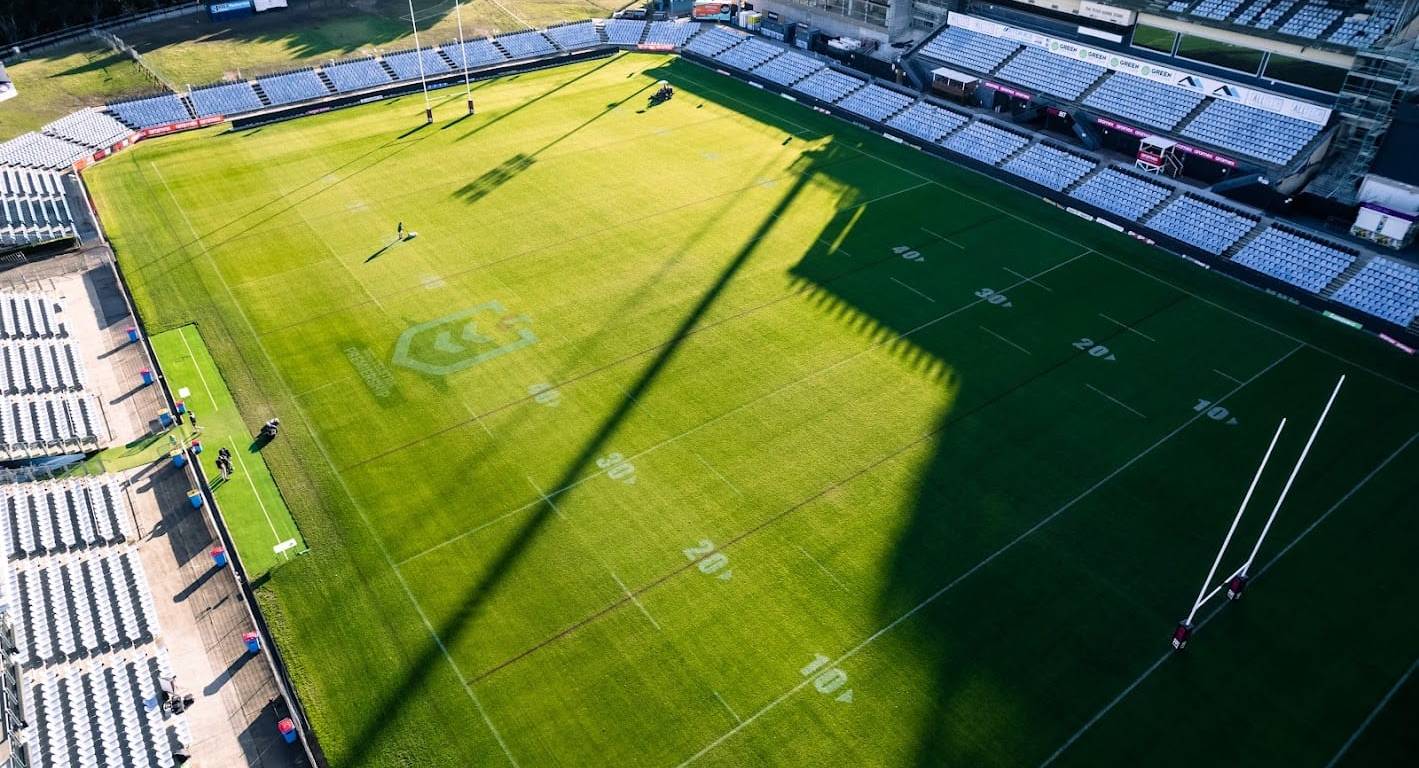
Cutting grass and managing turf are different activities that happen to involve the same equipment. Mowing maintains height; turf management maintains the plant, the soil beneath it and the conditions that let both perform under use. The distinction matters most on surfaces that take real traffic sports fields, high-use lawns, event spaces where a mowing-only regime produces gradual decline that is expensive to reverse. A proper turf management service starts below the surface.
Soil Is the Actual Asset
Grass is a symptom; soil is the system. Compaction is the most common underlying problem, caused by foot traffic and by machinery following the same route every visit. Compacted soil sheds water instead of absorbing it, restricts root development and starves roots of oxygen, which produces thin grass in exactly the same spots year after year. Soil testing establishes pH, nutrient levels and organic matter content, and it usually explains persistent problems that no amount of fertiliser has fixed.
Aeration and Decompaction
Relieving compaction is the intervention with the widest effect. Hollow-tine aeration removes cores of soil, creating space for air, water and root growth, and the holes can be filled with sand to improve drainage over time. Solid tining is less disruptive and shallower in effect. Deep decompaction addresses layers further down that surface treatments cannot reach. Frequency depends on traffic a lightly used lawn may need it annually, a heavily used pitch several times a year.
Managing Thatch
Thatch is the layer of dead and living organic matter between the green growth and the soil. A thin layer is beneficial; a thick one repels water, harbours disease and encourages shallow rooting. Scarification removes it mechanically, which looks brutal for a fortnight and improves the surface substantially afterwards. Judging when it is needed requires actually examining a soil profile rather than assessing the surface visually, which is one of several reasons this work sits outside general grounds maintenance.
Nutrition on Evidence Rather Than Schedule
Applying a standard fertiliser on a fixed calendar is common and imprecise. Effective programmes base nutrition on soil test results and observed growth, adjusting nitrogen, phosphorus and potassium ratios according to what the sward actually needs and the season it is in. Over-application produces soft growth vulnerable to disease and wastes money; under-application produces thin turf that weeds colonise. In a climate with continuous growth, nutrient demand is higher and more constant than in temperate regions, which changes the programme considerably and more so again for football pitch maintenance, where the sward has to recover between fixtures rather than simply persist.
Irrigation and Drainage Together
Water management works in both directions. Too little produces stress and thinning; too much encourages shallow roots, disease and moss. Deep infrequent irrigation drives roots downward and produces a more resilient surface than frequent light watering. Equally important is where water goes after heavy rain surfaces that hold water for hours are unusable and the turf deteriorates. Correcting falls, installing drainage or amending soil profile addresses that permanently, whereas repeated re-turfing of a wet area does not.
Mowing as Part of the System
Height and frequency matter more than most people assume. The working rule is to remove no more than a third of the blade at a cut, since heavier removal starves the plant and exposes soil. Slightly longer grass shades its own roots, holds moisture and resists weeds. Blade sharpness affects appearance directly a blunt blade tears the leaf tip, which browns within a day or two and gives the whole surface a dull cast. Varying the mowing direction between visits distributes wear from machinery.
Sports and High-Traffic Surfaces
Where a surface carries competitive use, requirements escalate. Playing characteristics, evenness, recovery between fixtures and wear in high-use zones all become part of the specification. Pitch programmes include renovation windows, overseeding of worn areas, divot repair, line marking and scheduling around fixtures, none of which fit within a general grounds contract. Attempting to run a pitch on a lawn maintenance regime produces a surface that deteriorates through the season.
Managing Shade
Turf needs light, and the most common cause of persistently thin grass is a canopy above it rather than anything in the soil. Where trees shade a surface heavily, no fertiliser or aeration programme will compensate. The options are to accept a reduced standard, to change to a more shade-tolerant species where one exists, or to address the canopy. Coordinating turf work with tree pruning allows light levels to be managed deliberately instead of treating the symptom repeatedly.
Building an Annual Programme
A workable programme sets out mowing frequency and height, aeration timing, scarification if needed, a nutrition schedule based on soil testing, an irrigation approach, and renovation windows where use permits. It should include a soil test at least annually and a written record of each intervention. Turf responds slowly, so results are measured across seasons rather than weeks which is precisely why a documented programme outperforms ad hoc response to whatever looks worst.
Expectations deserve setting honestly at the outset. A surface that has been declining for several years will not recover in one season, and the first visible improvement often comes after a period where the turf looks worse scarification and aeration both leave a surface that needs weeks to knit back together. Property managers who understand that sequence before it starts tend to stay the course; those who do not frequently abandon a programme at exactly the point it was beginning to work.
 Day Talk Sport